10 important tips for living more sustainably every day
No guilt trips and no impossible lifestyle changes. These are ten habits that make a measurable difference, ranked roughly by how much they achieve for the effort they take.
Most advice about green living falls into one of two traps. Either it is so small it barely matters, or so demanding that nobody keeps it up past February. We tried to pick habits in between: things an ordinary household can do, that are backed by evidence, and that often save money as well.
Each tip comes with three quick ratings. They are our own judgement, not measurements, and they will differ from home to home. Choices about food, heating and transport generally have a bigger affect than small swaps, so we put the big ones near the top.
The ten tips at a glance
- Plan your food and waste less of it
- Carry a bottle, a cup and a bag
- Put more plants on your plate
- Buy fewer clothes and wear them longer
- Sort your waste properly
- Turn the heating down by one degree
- Walk, cycle or take public transport for short trips
- Repair before you replace
- Use water, and the energy to heat it, wisely
- Choose products with less packaging
The tips
-
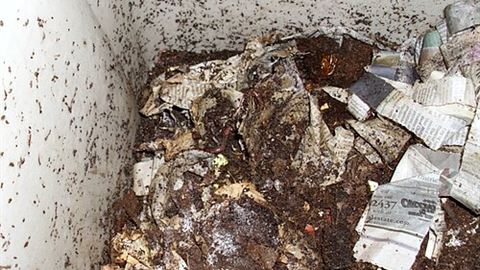
Photo: Quadell, CC BY 3.0, via Wikimedia Commons 1. Plan your food and waste less of it
- Area: Food
- Effort: Low
- Cost: Saves money
This is the tip with the biggest payoff for the least effort, which is why it comes first. According to Eurostat, the EU generated around 132 kg of food waste per person in 2022, and households were responsible for 54% of it, about 72 kg each. That is food someone grew, packed, transported and paid for, then threw away.
Most household waste comes from buying too much and forgetting what is in the fridge. Learn the difference between the two dates on packs: "use by" is about safety, so respect it; "best before" is about quality, and food is often fine after it. Whatever really can't be eaten belongs in the food waste bin or compost, not in general waste.
Try this week: Before your next shop, take a photo of the inside of your fridge. Buy only what you will eat in the next few days.
-
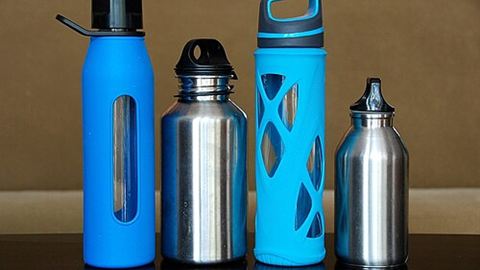
Photo: Worlds Direction, CC0, via Wikimedia Commons 2. Carry a bottle, a cup and a bag
- Area: Packaging
- Effort: Low
- Cost: Small one-off cost
A reusable bottle, a coffee cup and a folding shopping bag cover a surprising share of the single-use items people use on a normal day. The trick is not buying them, it is having them with you. Keep them where you can't miss them: by the door, in your work bag, in the car.
It is getting easier, too. Under the new EU packaging regulation, takeaway businesses will have to let customers bring their own containers at no extra charge. One caution: a reusable item only pays off if you actually reuse it many times. A drawer full of unused tote bags is not a win.
Try this week: Pick one item, the bottle or the cup, and carry it every day for two weeks until it becomes a habit.
-
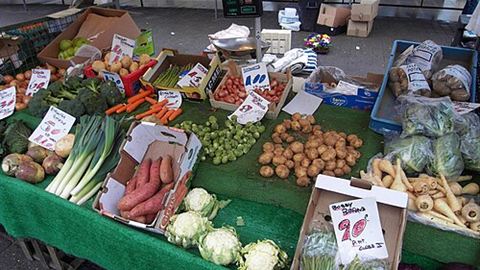
Photo: David Wright, CC BY-SA 2.0, via Wikimedia Commons 3. Put more plants on your plate
- Area: Food
- Effort: Medium
- Cost: Often saves money
What we eat matters more than how it is packed. A large 2018 study in Science that compared tens of thousands of farms found that plant-based foods generally have a much smaller environmental footprint than meat and dairy, especially beef. You don't have to go vegan to make a difference. Replacing some meals is already a real change.
Start with dishes you already like that happen to be meat-free, or swap half the minced meat in a recipe for lentils or beans. Seasonal vegetables from a market or a local box scheme also tend to come with less packaging.
Try this week: Choose two days a week without meat and plan those meals in advance.
-
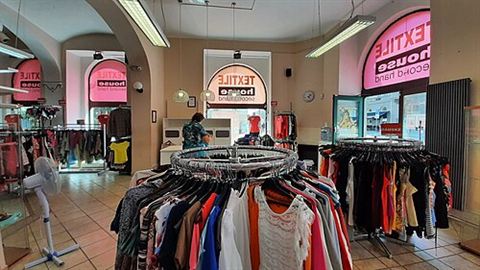
Photo: MAKY.OREL, CC0, via Wikimedia Commons 4. Buy fewer clothes and wear them longer
- Area: Consumption
- Effort: Low
- Cost: Saves money
Clothes have a much bigger footprint than most people think. The European Environment Agency found that textile consumption in Europe had the fourth highest impact on the environment and climate in 2020, after food, housing and transport. Most of that impact happens when clothes are made, so the most effective thing you can do is make them last.
Buy less, buy second-hand where you can, and look after what you have: wash at lower temperatures, dry on a line, mend small holes before they grow. When you do buy new, a well-made basic you will wear for years beats a cheap trend piece. The film The True Cost shows what is behind the price tag.
Try this week: Before buying any new piece of clothing, ask whether you will wear it at least thirty times.
-
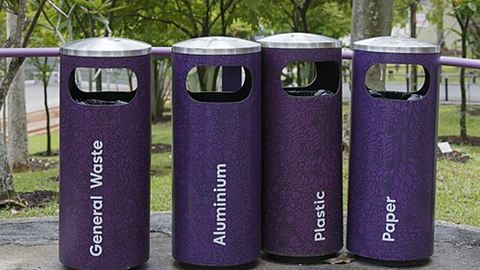
Photo: CEphoto, Uwe Aranas, CC BY-SA 3.0, via Wikimedia Commons 5. Sort your waste properly
- Area: Waste
- Effort: Low
- Cost: Free
Recycling only works if the right things end up in the right bin. A few wrong items can spoil a whole load. Check your local rules, because they really do differ from town to town, and stick a list on the inside of a kitchen cupboard.
The most common mistake we see is putting "compostable" or "biodegradable" plastic in the plastic recycling bin. Compostable plastics are not designed for mechanical recycling. They belong in the food waste bin only where your local system accepts them, otherwise in general waste. Our guide to compostable vs biodegradable explains the labels.
Try this week: Look up your municipality's sorting guide today and check the three items you are least sure about.
-
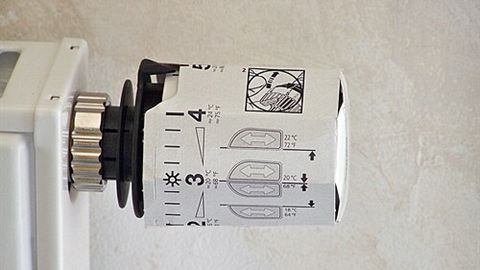
Photo: T.Voekler, CC BY-SA 3.0, via Wikimedia Commons 6. Turn the heating down by one degree
- Area: Energy
- Effort: Low
- Cost: Saves money
The International Energy Agency estimates that lowering the thermostat by just 1 °C saves around 7% of the energy used for heating. The European Commission has pointed out that the average home in the EU is heated to over 22 °C, while many people are comfortable at 19 or 20 °C with a jumper on.
Other easy wins: heat rooms you use rather than the whole house, close curtains at night, bleed radiators so they heat evenly, and don't block them with furniture. In summer, the same logic applies to air conditioning in reverse.
Try this week: Turn the thermostat down by one degree tonight and see whether anyone in the house notices after a week.
-
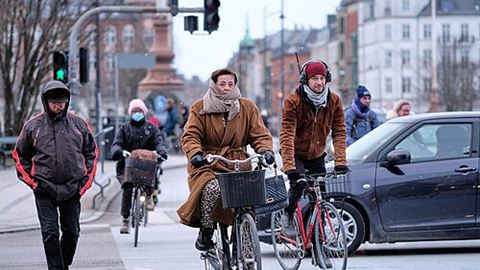
Photo: Kristoffer Trolle, CC BY 2.0, via Wikimedia Commons 7. Walk, cycle or take public transport for short trips
- Area: Transport
- Effort: Medium
- Cost: Saves money
Transport is one of the largest sources of greenhouse gas emissions in Europe, and many car journeys are short ones that could be walked or cycled. Short trips are also the least efficient for a car, because the engine is still cold.
You don't have to sell your car. Start with the trips that are easiest to change: the school run, the local shop, the gym. An electric bike can turn a sweaty commute into a pleasant one, and public transport lets you read instead of sitting in traffic.
Try this week: Pick one regular trip under three kilometres and do it on foot or by bike for a month.
-
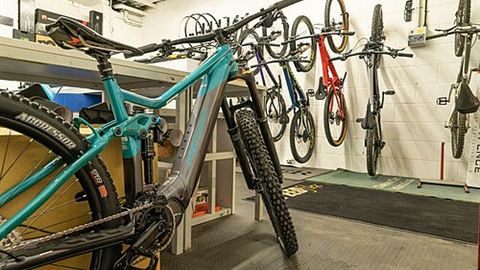
Photo: Alextredz, CC BY-SA 4.0, via Wikimedia Commons 8. Repair before you replace
- Area: Consumption
- Effort: Medium
- Cost: Usually saves money
Every product you keep using is one that doesn't have to be made, shipped and packed again. Phones, appliances, bikes, shoes and furniture can often be fixed for less than a replacement costs.
The law is moving in your favour. The EU adopted a right to repair directive, Directive (EU) 2024/1799, in June 2024, and Member States had until 31 July 2026 to bring it into national law. It is meant to make repair easier and more attractive for consumers, including after the legal guarantee has expired. Many towns also have volunteer repair cafés where you can fix things together with people who know how.
Try this week: Find the nearest repair café or repair shop and take that one broken thing you have been meaning to fix.
-
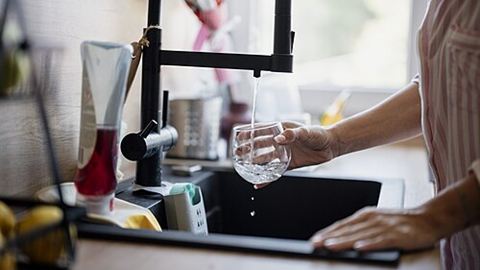
Photo: Shixart1985, CC BY 2.0, via Wikimedia Commons 9. Use water, and the energy to heat it, wisely
- Area: Water and energy
- Effort: Low
- Cost: Saves money
Clean water takes energy to treat and pump, and hot water takes a lot more energy to heat. That makes shorter showers, full loads in the washing machine and dishwasher, and lower wash temperatures some of the easiest ways to save both water and energy at home.
Drink tap water where it is safe, which is almost everywhere in the EU. It avoids plastic bottles entirely and costs a fraction of the price. Fix dripping taps and running toilets, which waste water around the clock without anyone noticing.
Try this week: Set a timer for your next shower and try to keep it under five minutes.
-
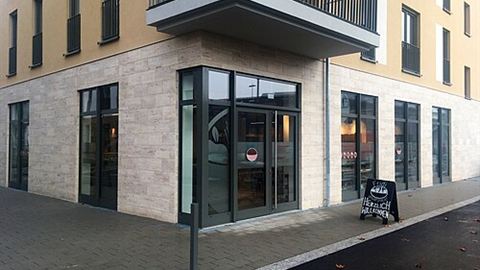
Photo: Qwave, CC BY-SA 4.0, via Wikimedia Commons 10. Choose products with less packaging
- Area: Packaging
- Effort: Medium
- Cost: Varies
The greenest packaging is the one that isn't needed. Buy loose fruit and vegetables, refill containers at zero-waste or refill shops, and pick larger packs of things you use a lot. EU rules are pushing the same way: from 2030, the packaging regulation restricts single-use plastic packaging for small quantities of fresh fruit and vegetables, with some exceptions.
When packaging is necessary, look for packs made of one material that is easy to recycle where you live. Be sceptical of vague claims like "eco-friendly". A real claim names a standard or a certificate. Our guide to biodegradable food packaging explains when bio-based materials make sense and when they don't.
Try this week: On your next shop, put back one product that has an obviously unnecessary extra layer of packaging and choose an alternative.
Where to start
Don't try all ten at once. Pick the two that fit your life most easily, give them a month, and add another when they feel normal. If you only do one thing, make it the first: plan your food and waste less of it. It saves money from the first week, and food waste is a problem that every kitchen can actually shrink.
If you'd like something to watch while you think about it, our list of the 50 best environmental films and documentaries has plenty of ideas.
Frequently asked questions
What is the easiest way to live more sustainably?
Does turning the heating down really help?
Should compostable packaging go in the recycling bin?
Sources
- Food waste: 132 kg per inhabitant in the EU in 2022. Eurostat, 2024.
- Reducing food's environmental impacts through producers and consumers. Poore J., Nemecek T., Science 360(6392):987-992, 2018.
- Textiles and the environment: the role of design in Europe's circular economy. European Environment Agency, 2022.
- Saving energy. International Energy Agency.
- Playing my part: energy saving actions. European Commission, 2022.
- Directive (EU) 2024/1799 on common rules promoting the repair of goods. Official Journal of the EU, 2024.
- Regulation (EU) 2025/40 on packaging and packaging waste. Official Journal of the EU, 2025.
- Biobased, biodegradable and compostable plastics. European Commission, DG Environment.